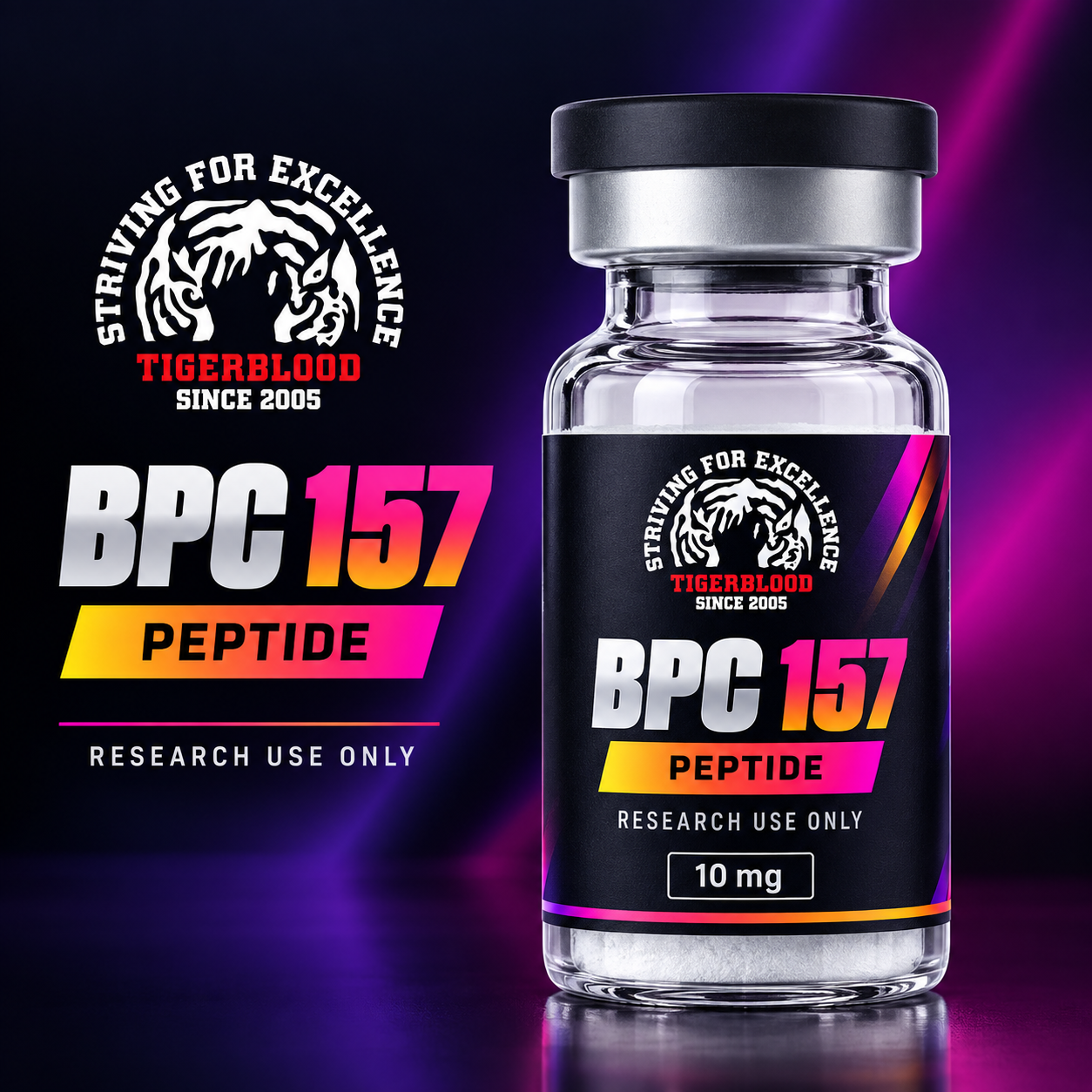
BPC-157
Body Protection Compound-157 — a synthetic 15-amino-acid peptide studied in laboratory and animal research for its role in tissue repair and recovery.
Research Use Only — Not for Human ConsumptionShort Description
BPC-157 (Body Protection Compound-157) is a synthetic peptide based on a 15-amino-acid sequence originally identified in human gastric juice. It has been studied extensively in laboratory and animal research for its potential role in gastrointestinal protection, tendon and ligament healing, and general tissue recovery processes. Tiger Blood Pharmaceuticals supplies BPC-157 strictly for laboratory research purposes.
Current Legal Status (Mauritius)
Tiger Blood Pharmaceuticals is pursuing product registration in the Republic of Mauritius, where pharmaceutical products are regulated by the Pharmacy Board, operating under the Ministry of Health and Wellness pursuant to the Pharmacy Act 1983. Only products registered with the Pharmacy Board may be lawfully imported, manufactured or sold in Mauritius for medicinal use.
BPC-157 is not currently registered as a pharmaceutical product in Mauritius, and our registration application has not yet been completed. Until registration is granted, BPC-157 is supplied strictly for laboratory research use and is not sold, marketed or labeled as a medicine, supplement or treatment for any condition in any jurisdiction.
Tiger Blood Pharmaceuticals does not hold regulatory approval for BPC-157 in the United States, the European Union, the United Kingdom, or any other jurisdiction. Because this website is publicly accessible, customers are responsible for confirming that the purchase, import and use of this product is lawful where they live before placing an order.
This page will be updated once our Mauritius registration status changes.
Research Evidence
Most published research on BPC-157 comes from laboratory and animal studies. These have examined its effects on gastrointestinal healing, tendon and ligament repair, and models of ischemia-reperfusion injury, with researchers reporting generally favorable safety signals within these preclinical models.
Human data remains limited. A 2025 literature review identified only a small number of human studies, including a retrospective case series of 12 patients with knee pain and a Phase I safety trial in healthy volunteers whose results have not been publicly submitted. No large-scale, peer-reviewed clinical trial has established that BPC-157 is safe or effective in humans for any condition.
This summary is provided for scientific reference only. It is not a claim that BPC-157 treats, cures or prevents any disease.