Peptides vs Anabolic Steroids: Similarities, Differences & Risks
A scientific comparison of peptides and anabolic-androgenic steroids, including mechanisms, overlapping biological effects, clinical uses and risks.
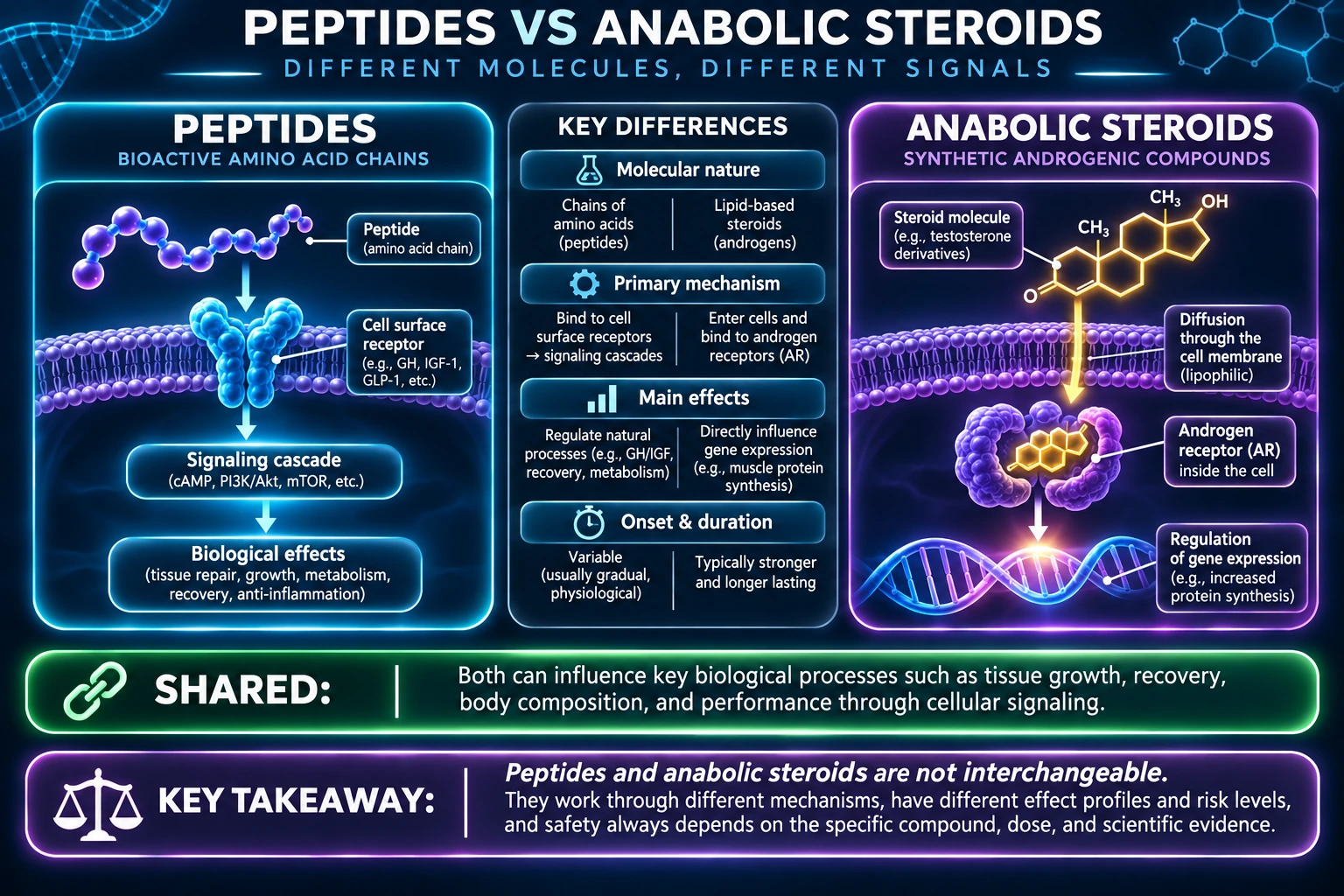
Click the infographic to view it at full size.
The central distinction
Peptides are chains of amino acids. Anabolic-androgenic steroids (AAS) are lipid-derived compounds structurally related to testosterone. Their chemical structures influence their pharmacology, but neither category has a single uniform effect.
How peptide signaling works
Many peptide hormones bind to receptors on the surface of cells, triggering intracellular signaling cascades. Examples include insulin and GLP-1 receptor agonists. Other peptides have different targets and functions; some peptide medicines are well studied, while many products marketed for bodybuilding remain experimental.
How anabolic steroids work
Testosterone and related AAS enter target tissues and activate androgen receptors, altering gene expression and protein metabolism. Medical testosterone replacement for confirmed hypogonadism is different from nonmedical supraphysiological anabolic-steroid use.
Where their effects overlap
Depending on the specific substance, both categories may influence growth, energy balance, body composition or recovery. But the mechanisms, effect sizes and quality of clinical evidence differ. Peptides should not be described as a universally gentler or safer alternative to steroids.
Risks and the evidence gap
Nonmedical AAS use is associated with cardiovascular, reproductive, endocrine and psychiatric harms. Peptide risks are compound-specific: adverse effects, immune reactions, unknown long-term outcomes and product quality can all matter. Many so-called research peptides lack robust human safety and efficacy trials.
Practical conclusion
Ask what specific molecule is being discussed, which receptor it acts on, whether human trials support its intended use and whether a regulated formulation exists. A molecular category is not proof of safety or benefit.
Scientific references
- Anabolic-androgenic steroids: how do they work and what are the risks?
- A new era of doping? Peptide and peptide-analog drugs in sport
- Anabolic–androgenic Steroids Revisited (2026)
Educational research commentary only. Not medical advice or instructions for self-administration. Clinical decisions require an appropriately qualified professional.